Mobile detailing can reduce or remove many light scratches and swirl marks when the service includes paint correction, not just a wash and wax. A local mobile auto detailing technician brings the tools, lighting, polishing products, and protection options to your home or workplace so your vehicle can be inspected and treated where it sits. The right result depends on the depth of the marks, the condition of the paint, and whether you choose a maintenance detail, enhancement polish, or more involved scratch repair.
Yes, mobile detailing can remove many swirl marks, wash marring, oxidation haze, and light clear-coat scratches through paint correction. These marks usually sit in the top clear coat, so a trained detailer can level and refine the surface with machine polishing until the paint reflects more evenly. Deeper scratches that catch a fingernail, expose primer, or show bare metal may need touch-up paint, body shop repair, or a separate scratch repair process rather than standard car detailing.
That distinction matters because “scratch removal” is not one single service. A basic detailing service may clean and protect the vehicle but leave defects behind. A correction-focused service is designed to improve the finish itself by removing or reducing the tiny defects that scatter light and make paint look dull, cloudy, or webbed under the sun.
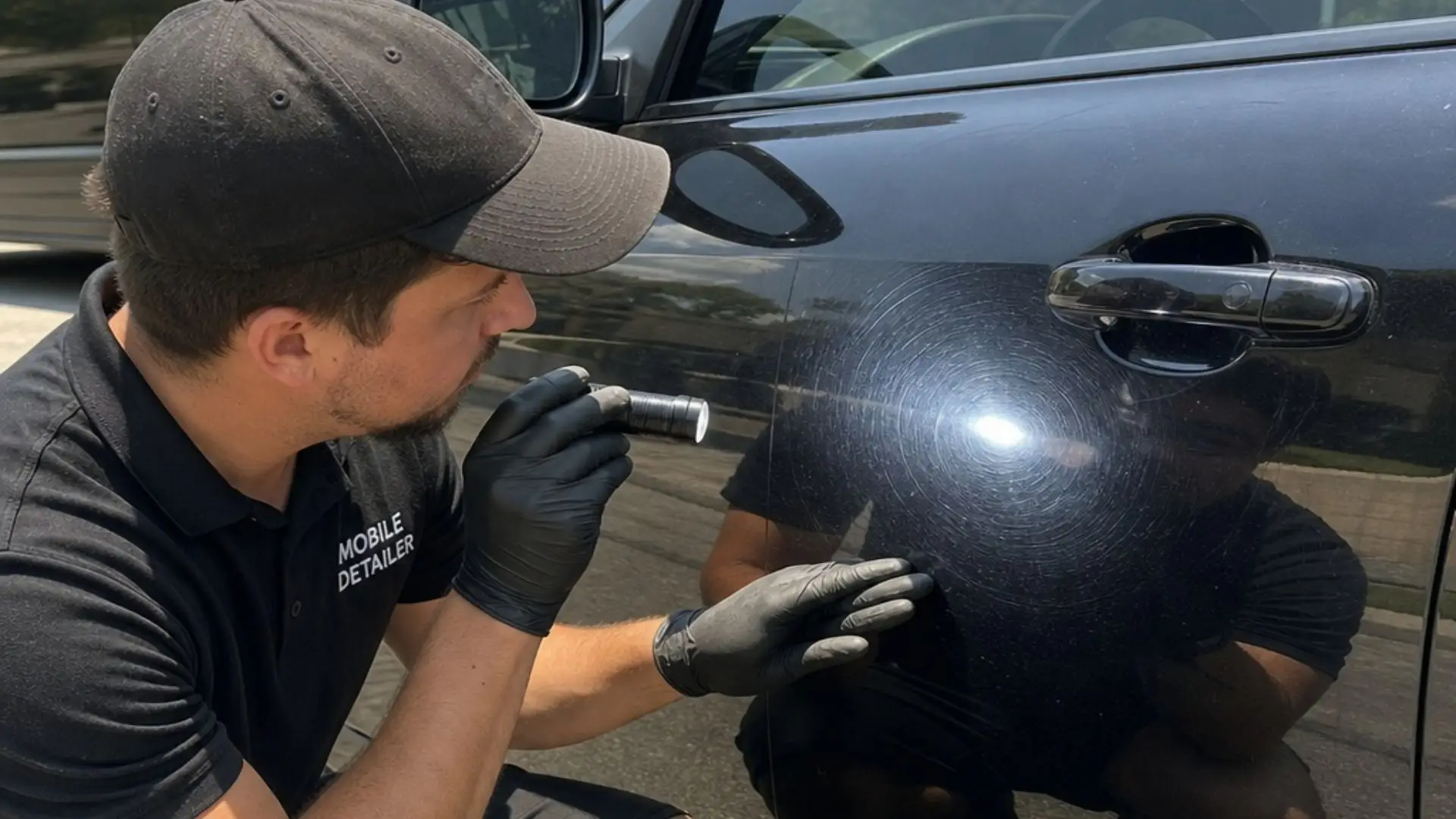
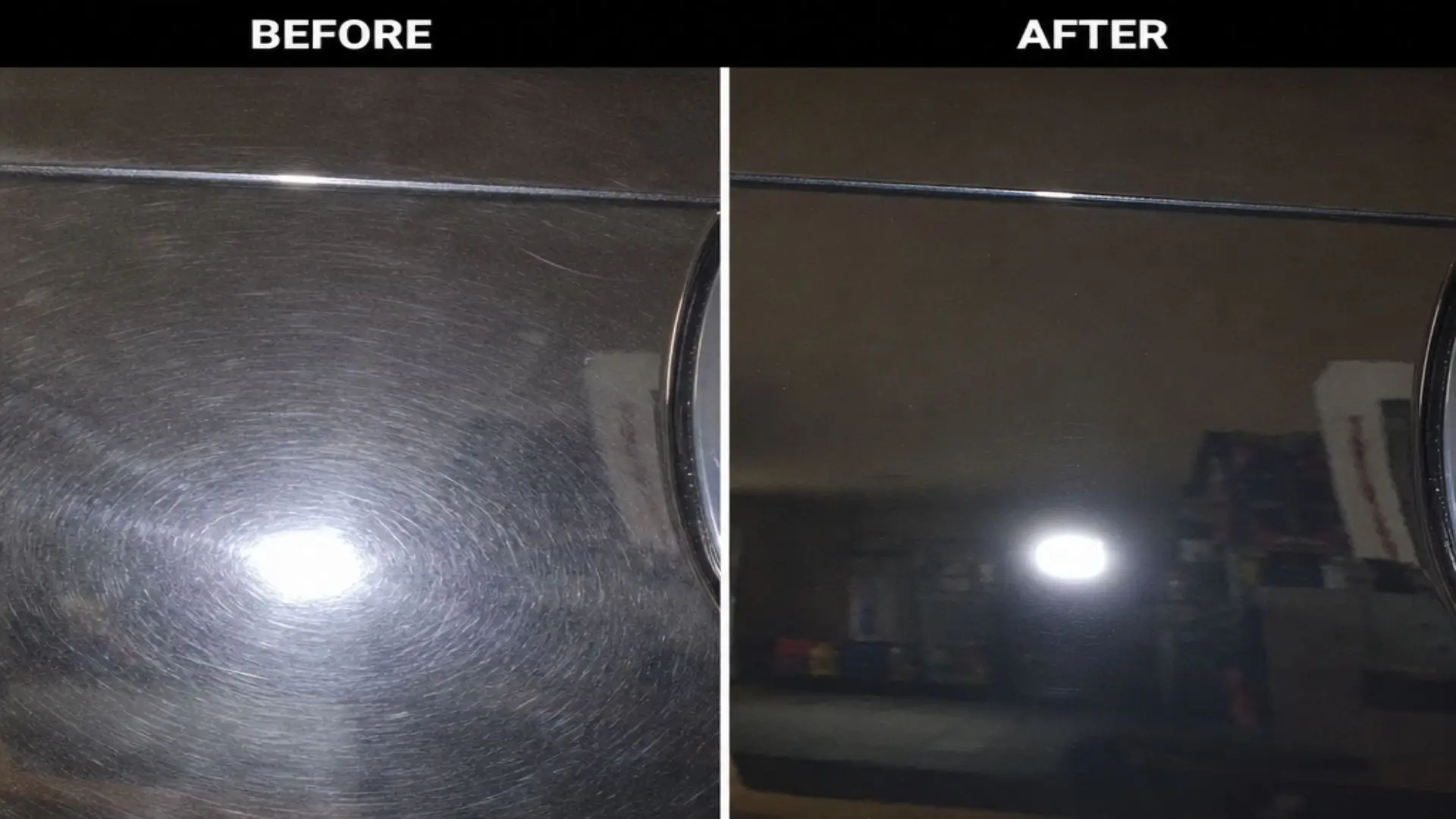
Paint correction is the part of auto detailing that addresses scratches and swirl marks most directly. After the vehicle is washed and decontaminated, the technician uses polishing machines, pads, and compounds to carefully refine the clear coat. The goal is not to “fill” every mark temporarily, but to improve the surface so reflections become sharper and the color looks deeper.
For many daily drivers, a one-step correction or enhancement polish can make a dramatic visual difference without chasing every defect. Vehicles with heavier wash damage, neglected paint, or dark finishes may need a multi-step correction to cut, refine, and finish the surface. A good mobile detailing provider should inspect the paint first, explain what level of improvement is realistic, and avoid promising perfection when the paint is too thin, too damaged, or previously repaired.
Common defects paint correction can improve include:
Swirl marks from improper washing: Circular or web-like marks that show strongly in sunlight or under bright garage lighting.
Light clear-coat scratches: Fine marks from towels, brushes, keys, bags, or accidental contact that do not penetrate through the paint system.
Water spot etching: Mild spotting that has marked the clear coat, depending on how long it has been present.
Oxidation and dullness: Faded-looking paint that can often be revived through polishing and protection.
Holograms from poor polishing: Buffer trails left by previous machine work that can usually be refined by an experienced detailer.
A proper correction appointment is more than showing up with a polisher. The paint has to be cleaned safely first, because polishing over dirt or bonded contamination can create more scratches. That preparation is one reason professional detailing services often produce better results than a quick hand wax or a store-bought scratch remover.
A typical mobile detailing scratches swirl marks appointment may include:
Paint inspection: The detailer checks the type, location, and severity of scratches and swirl marks, often under direct light.
Careful wash: Loose dirt is removed with wash methods designed to reduce the risk of adding new marring.
Paint decontamination: Clay or chemical decontamination may be used to remove bonded grime, tar, road film, or embedded particles.
Test spot: A small area is polished first to find the least aggressive combination that delivers the desired improvement.
Machine polishing: The paint is corrected with selected pads and compounds based on the paint condition.
Refinement: Finer polishing may be used to restore gloss after heavier cutting.
Protection: Wax, sealant, or ceramic-style protection may be applied to help preserve the corrected finish.
This process is especially useful before selling a vehicle, after years of automatic car washes, or when a black, blue, red, or other dark-colored car looks gray and hazy in direct sun. The improvement can make the whole vehicle look cleaner even before anyone notices the individual scratches.
Not every scratch should be polished aggressively. Your vehicle’s clear coat is a protective layer, and removing too much of it can create long-term problems. A responsible mobile car detailing technician will balance improvement with paint preservation, especially on older vehicles, repainted panels, edges, body lines, and thin areas.
As a general rule, if a scratch disappears when wet, it may be a good candidate for polishing. If it stays white, feels deep, or catches your fingernail, it may only improve partially with detailing. If primer, plastic, or metal is visible, polishing alone cannot rebuild the missing paint.
Here is what different marks usually mean:
Very fine swirls: Often respond well to paint correction and may be greatly reduced or removed.
Light surface scratches: Often improve significantly if they are only in the clear coat.
Moderate scratches: May become less visible but not fully disappear without more advanced repair.
Deep scratches: Usually require touch-up paint, wet sanding by a qualified professional, repainting, or body shop work.
Cracked or peeling clear coat: Cannot be fixed by polishing and may need refinishing.
The best service conversation is straightforward: what can be safely removed, what can be improved, and what should be left alone or repaired another way.
The advantage of mobile detailing is convenience without giving up a careful process. Instead of arranging a ride, waiting at a shop, or losing part of your day, you can schedule detailing services where the vehicle is parked. This is helpful for busy commuters, families with multiple vehicles, work trucks, and anyone preparing a car for sale or lease return.
Because paint correction requires space, lighting, water access in some cases, and enough time to work panel by panel, the appointment area matters. A shaded driveway, garage, carport, or quiet parking area can help the technician inspect the finish and polish more consistently. If your location has restrictions, limited access, or no safe work area, discuss that before booking so the service can be planned properly.
Before your appointment, it helps to:
Park the vehicle where there is enough room to open doors and work around all sides.
Remove personal items if interior detailing is also scheduled.
Point out the scratches that concern you most.
Share whether the vehicle has been repainted or recently repaired, if you know.
Ask what level of correction is included and what protection will be applied afterward.
These simple steps help the detailer focus on the areas that matter most to you and set expectations before polishing begins.
If your main concern is dull paint, spiderweb swirls, or light scratches, ask specifically for paint correction or polishing, not only a standard wash package. If your vehicle mostly needs cleaning, a maintenance detail may be enough. If the finish has visible defects and you want meaningful improvement, choose a correction-based auto detailing service.
A good fit may be an enhancement polish when you want the car to look glossier and cleaner without pursuing every mark. A more intensive correction may be better when the paint is heavily swirled or you are preparing a special vehicle for photos, sale, or long-term protection. For deep isolated damage, ask whether scratch repair is available or whether a body shop would be more appropriate.
When requesting a quote, describe the vehicle size, color, paint condition, and the result you want. Photos in direct light can help, but an in-person inspection is often the best way to judge depth and risk. The clearer you are about your expectations, the easier it is for the detailer to recommend the right service instead of overselling or under-delivering.
If swirl marks and scratches are making your vehicle look older than it is, a mobile detailing appointment can be a practical next step. The service can clean, correct, and protect the paint at your location while giving you a realistic plan for what can be removed and what can only be improved.
Reach out to a local mobile car detailing provider and ask for a paint inspection, correction options, and protection recommendations. With the right process, your vehicle can leave the appointment with sharper reflections, cleaner color, and a finish that is easier to maintain going forward.