Mobile detailing can remove many stains and odors from a vehicle, especially when the source is in the carpet, seats, mats, vents, or interior trim. The right detailing services combine inspection, upholstery cleaning, stain treatment, extraction, steam, and odor removal methods to improve both how the cabin looks and how it smells. Results depend on the type of stain, how long it has been there, the material affected, and whether the odor source can be fully reached.
Mobile detailing can treat common interior stains and odors by cleaning the affected surfaces at your location instead of requiring you to bring the vehicle to a shop. A professional car detailing appointment may address food spills, drink stains, pet smells, smoke residue, mildew-like smells, sweat, dirt, and everyday buildup that settles into fabric and carpet fibers.
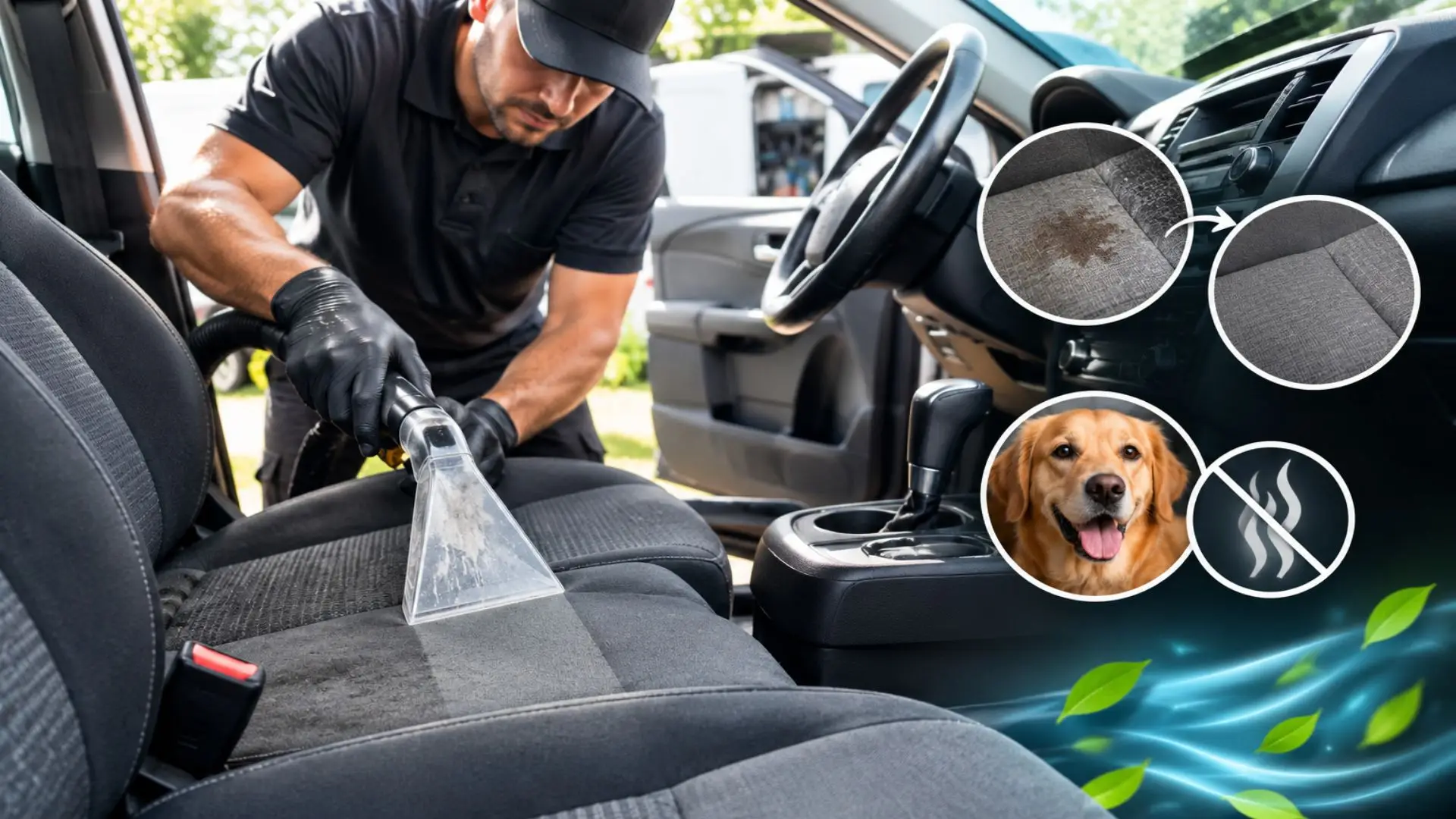
The key is that mobile detailing is not just a quick wipe-down. Interior-focused detailing services usually involve a step-by-step process that targets the visible stain and the hidden source behind the smell. For example, a coffee spill on a cloth seat may need pre-treatment, agitation, hot-water extraction, and drying. A lingering odor may require cleaning the carpets, seats, floor mats, and nearby plastics because smells often spread beyond the original spot.
That said, no honest detailer should promise that every stain or odor will disappear completely. Some dyes, chemicals, smoke contamination, mold problems, and deeply absorbed spills can permanently affect materials. The goal of quality mobile detailing stains odors treatment is to deliver the best possible improvement while protecting the interior from unnecessary damage.
Stain and odor removal starts with identifying what caused the problem and what material is affected. Cloth seats, leather, vinyl, carpet, and headliners all respond differently to moisture, heat, agitation, and cleaning products. A careful detailer will adjust the process instead of using the same method everywhere.
A typical process may include:
Interior inspection The detailer checks the source, size, age, and location of the stain or odor. This helps determine whether the issue is on the surface or has soaked into padding, seams, carpet backing, or vents.
Vacuuming and debris removal Loose dirt, crumbs, pet hair, and grit are removed first. This step matters because dry debris can interfere with upholstery cleaning and may create more staining if it becomes wet.
Targeted pre-treatment Stain-specific cleaners are applied to break down the problem area. Organic spills, grease, ink, dye transfer, and pet accidents often require different approaches.
Gentle agitation Brushes, microfiber towels, or interior-safe tools help loosen residue from fibers and textured surfaces. The goal is to lift contamination without fraying fabric or damaging trim.
Extraction or steam cleaning when appropriate For many fabric seats and carpets, extraction helps pull dissolved soil and cleaner out of the material. Steam can also help with certain grime and odor issues, though it must be used carefully around electronics, adhesives, leather, and delicate fabrics.
Odor neutralizing Odor removal works best when the source is cleaned first. Afterward, an odor treatment may be used to neutralize remaining smells rather than simply covering them with fragrance.
Drying and final check Moisture control is important. Seats and carpets should be allowed to dry properly so a cleaning appointment does not create a new musty smell.
Many everyday stains respond well to professional car detailing, especially if they are treated before they have fully set. The sooner a spill is addressed, the better the chance of strong improvement.
Common stains that mobile detailing may improve include:
Coffee, soda, and juice: These can leave sticky residue and discoloration. Extraction and stain treatment often help, but dark drinks may leave shadows if they have sat for a long time.
Food grease and sauces: Oily stains need products that can break down grease without oversaturating fabric.
Mud and dirt: These usually improve well when dry soil is vacuumed first and the remaining marks are cleaned from fibers.
Pet accidents: These require both stain treatment and odor removal because the smell can soak below the surface.
Sweat and body oils: Armrests, headrests, seat bolsters, and steering-area surfaces can collect oils that attract dirt and create odors.
Makeup, sunscreen, and lotion: These can be stubborn because they often contain oils, pigments, or water-resistant ingredients.
Some stains are more difficult. Ink, paint, bleach marks, dye transfer, rust, and old stains may not fully come out. In those cases, detailing can still reduce the appearance and improve the overall cabin, but permanent discoloration may remain.
Odors return when the source was masked instead of removed. Sprays, air fresheners, and scented products can make a vehicle smell better for a short time, but they do not solve odor trapped in carpet padding, cloth seats, vents, floor mats, or hidden debris.
This is why odor removal often takes more than one simple step. If milk spills into carpet, cleaning only the top fibers may leave residue below. If a pet odor has reached seat seams, the surrounding fabric and nearby surfaces may need attention. If smoke has coated plastics, glass, upholstery, and the headliner, the smell may remain until those surfaces are cleaned thoroughly.
A good mobile detailing process focuses on source removal first and scent second. A clean smell should come from a cleaner interior, not from heavy perfume layered over contamination.
Different odors require different methods. A detailer may combine several techniques depending on the vehicle’s condition and the type of smell.
This is the foundation of odor removal. Carpets, mats, seats, cupholders, door pockets, under-seat areas, and cargo spaces are cleaned to remove the material causing the odor. Without this step, any deodorizing treatment is temporary.
For cloth interiors, upholstery cleaning can remove residue that holds smells. Extraction is especially useful when spills have soaked into fabric or carpet. It rinses and removes contamination more effectively than surface wiping alone.
Steam may help loosen grime and reduce odor-causing residue on certain surfaces. However, it should be used with care. Too much heat or moisture can harm adhesives, electronics, leather finishes, or delicate headliners.
Some odor treatments are designed to break down organic residue, such as pet accidents or food spills. Others neutralize odor molecules after cleaning. The right choice depends on the source and surface.
If odors appear when the air conditioning or heat is on, the issue may involve vents, cabin filters, or moisture in the HVAC system. Detailing can clean accessible vent areas, but mechanical or filter-related problems may require additional service.
The outcome depends on more than the cleaning product used. A fresh spill on durable carpet is usually easier to improve than a years-old stain on light fabric. Odors are also easier to remove when the source is known and reachable.
Important factors include:
Age of the stain: Older stains may bond with fibers or change the material color.
Type of material: Cloth, carpet, leather, suede-like surfaces, vinyl, and plastic require different care.
Depth of contamination: Surface residue is easier to remove than liquid that has soaked into padding.
Previous cleaning attempts: Harsh chemicals, scrubbing, or household cleaners may set stains or damage fibers.
Heat exposure: Sun and heat can bake stains into upholstery and intensify odors.
Moisture history: Musty smells may indicate trapped moisture that needs careful drying and possibly further inspection.
A professional detailer should set expectations before beginning. If a stain is likely permanent, you should know that upfront. If an odor may require more than one treatment, that should be explained clearly.
A little preparation can help your mobile detailing appointment go smoothly. You do not need to clean the vehicle first, but you can make it easier for the detailer to reach the problem areas.
Use this quick checklist:
Remove personal items from seats, floors, pockets, and the trunk.
Point out the exact stain or odor source if you know it.
Share what caused the stain, if possible.
Mention any previous cleaning products used.
Park where the detailer has safe access to the vehicle.
Allow time for seats or carpets to dry after upholstery cleaning.
Avoid adding air fresheners before service, since they can hide the real odor source.
If the stain is fresh, blot it gently with a clean towel. Avoid aggressive scrubbing because that can spread the stain or push it deeper into the fibers.
Liberty Auto Care provides mobile detailing for drivers who want a cleaner, fresher vehicle without rearranging their day around a shop visit. The convenience matters: stains and odors are easier to address when service can come to you, especially after spills, pet travel, family messes, or everyday wear.
Choosing Liberty Auto Care also means getting a practical approach to interior car detailing. Instead of relying on fragrance alone, the focus is on cleaning the affected surfaces, treating the source, and improving the overall condition of the cabin. That can make your vehicle more comfortable for commuting, rides with family, road trips, or preparing a car for sale.
For customers searching for detailing services that address both appearance and smell, Liberty Auto Care offers a straightforward solution: mobile detailing that targets the real causes of stains and odors wherever possible.
Mobile detailing can reduce smoke smell by cleaning surfaces where smoke residue settles, including seats, carpets, mats, panels, glass, and accessible interior areas. Severe or long-term smoke odor can be difficult because residue may reach the headliner, vents, and hidden materials. A detailer can improve the cabin, but complete removal may depend on the level of contamination.
Old stains can often be improved, but they are less predictable than fresh stains. If the stain has bonded with the fabric, changed the dye, or been treated with the wrong product, it may not fully disappear. Professional upholstery cleaning gives the best chance of improvement while reducing the risk of damage.
Quality odor removal should not rely on overpowering fragrance. The best approach is to clean the source and use an appropriate neutralizing treatment when needed. A light fresh scent may remain, but the goal is a clean interior rather than a heavily perfumed one.
Mobile detailing can be safe for leather when the correct cleaners, tools, and techniques are used. Leather should not be oversaturated or scrubbed with harsh brushes. A detailer should use products suited for automotive leather and avoid methods that could strip or damage the finish.
Drying time varies based on the material, amount of moisture used, weather, airflow, and how heavily the area was cleaned. Fabric seats and carpets may need extra time before regular use. Your detailer can give practical guidance after seeing the vehicle.
Mobile detailing can make a major difference when stains and odors are handled with the right process. The most effective results come from identifying the source, cleaning the affected materials, treating odors rather than masking them, and setting realistic expectations for older or severe problems.
If your vehicle has stubborn stains, pet smells, smoke odor, food spills, or a cabin that no longer feels fresh, schedule mobile detailing with Liberty Auto Care today and get professional detailing services brought directly to your location.